Category: TechtodayMy Japanese colleague once told me that she was having dinner with a few Tokyoite sararimen (salarymen) and the discussion swung to the
iPhone. My friend didn't have an iPhone and they asked her whether it wasn't inconvenient not to have Apple's ubiquitous mobile device? They didn't tell her it's convenient to have one but the other way around - you were basically crippled without an iPhone. Thankfully, my friend didn't give in to peer pressure and still sports an
Android phone.
I've had my 4th Generation
iPod for close to two years now and it's running
iOS 6.1.3. I primarily use the iPod Touch for listening to news, music, and playing music videos. When I received an
iPad 2 as a gift, I stopped using the iPod Touch as an ereader/comic book reader and used the iPad 2 as my primary reading device for illustrated material, including magazines, old Spidey comic books, and PDFs of technical books for markup language, history, literature, and technical writing. For over eight months since I received both products, the iPad and iPod Touch were offline because I never really needed to be "connected" as most people are through social networking. Most of my work was done on my
openSUSE and
Lubuntu machines and
Windows 7 for commercial software.
Recently, however, I finally powered on the wireless option on both the iPod Touch and iPad 2 and for some blasted reason I can't switch it off anymore - being online on an iOS device can be addicting.
The necessary evil - iTunes?
When the most recent overhaul of
iTunes came out, people were up in arms with the new interface and the buggy software. It wasn't nearly as loud as the exaggerated complaints for
Windows 8 but the hullabaloo certainly couldn't be ignored.
For my part, I've never complained about iTunes. I have no qualms about connecting the iPod Touch/iPad to my
Lenovo, booting into Windows 7, and transferring episodes of
The Tudors and
Downton Abbey or syncing my Ella Fitzgerald, Louis Armstrong and Frank Sinatra MP3s. The latest iteration of iTunes was a bit confusing at first. However, just like any updated Linux desktop environment, it just took a bit of getting used to (try
E17 and you'll know what I mean). iTunes on Windows 7 crashed often, but I chalked it up to Microsoft's OS and iTunes not playing well together - I'm pretty sure it works fine on OSX for those who own the exorbitant
iMac or
Macbook Pro. At least Apple provided support for Microsoft operating systems - they have never really provided anything for Linux platforms.
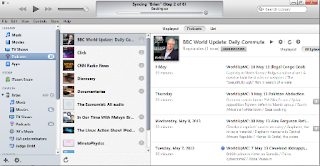
When I'm on the Apple Store in iTunes, I'm just grateful there are useful and free apps still available despite the best ones being filtered by China's Great Wall. Podcasts from
BBC are easily accessible and I recently even subscribed to
CNN Radio, which isn't as good as BBC but provides an American perspective. Managing apps using iTunes on Windows isn't perfect either - iTunes either crashes or prevents external hard drives from being disconnected. However, it's not a big deal compared to a memory kernel dump or SELinux error. When I need to refer to a reference manual, say for
Corel Designer, moving files to the
Adobe Reader or
iBooks app is pretty straightforward.
I can certainly manage my iPod and iPad without the iTunes desktop application using any one of my Linux machines.
Ubuntu-based distributions like
Lubuntu can easily access the file structure of iOS for deleting, moving, and copying files. Meanwhile, you can install a few packages to openSUSE and
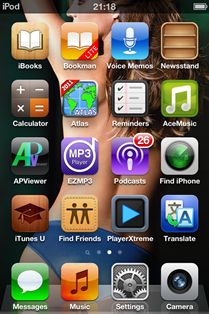
Fedora to get the same functionality. You can't really sync the official Apple apps such as iBooks, Podcasts, and the MP3 player using Linux, but there are dozens of free apps that support direct file transfer (I use
CloudReader and
Bookman for documents and
AceMusic and
EZMP3 for music).
Of course, I still prefer to have iTunes around since I support many of the available podcasts like
The Linux Action Show. Since I have a Windows 7 machine on my network, why not?
An Amazing Ecosystem
Websites such as
Wired and
Ars Technica often have readers that complain about Apple's "walled" system. It's not really a big deal. I would be as happy on an
Android tablet as I would be on the iPad especially since exceptional apps like
OneNote and
Flipboard are available there. And yes, I sync my
Microsoft OneNote notebooks to my iOS devices (oh, the horror!). Comparing
Google's services with Apple's isn't an issue. Users should stick to what works for them and what they like to use.
I'm not a tablet gamer (What the heck is
Temple Run?) and neither am I a power user so I probably don't represent the typical user very well. However, I do appreciate the ability to sync my calendar and notes between my iPad and iPod (the
Reminders app for some reason doesn't sync).
Find iPhone, iTunes U, Find Friends, FaceTime, Photo Stream, and
Passbook are pretty impressive apps but I have absolutely no use for them (though they are nice to have around). Apple
iCloud generously provides users with an @me.com and @cloud.com email address along with storage. I'm itching to use those two email addresses and the online storage but I can't seem to find any use for them what's with my trusty
SkyDrive and
Gmail accounts around.
 "The maps are wrong Jr."
"You're right, dad. Apple maps suck."
Screenshot from Indiana Jones and the Last Crusade (1989)
The iOS ecosystem is pretty robust and I can see why there's an overflowing devotion and love for iOS devices and Apple products in general. It confuses me to no end why so many users bitch about iOS and criticize Android to the ends of the earth. They are different ecosystems that satisfy different needs. From a market/financial standpoint the manufacturers and the products compete with each other but consumers are wasting their breathe ranting - choose the ecosystem that works for you.
The quandary is somewhat like the whole OSX, Windows, and Linux non-issue. There's absolutely no reason to abandon one over the other if all of them serve a purpose or provide a requirement.
Windows 8, Ubuntu, and Firefox
As a longtime supporter of Linux, I'm fully aware that Ubuntu will make a go at building their own ecosystem (
Ubuntu One and
Ubuntu Software Center have been around for awhile now).
Mozilla, with its well-established history on the web, is also making a go at it and is starting off in the mobile market. There's a huge chance both will fall flat on its face, but the attempt by both companies is admirable and courageous.
And the Windows 8 ecosystem (plus
XBOX)? I'm willing to give it a chance. The Android ecosystem has reached a point of being close to excellent and the iOS world, for all the criticisms against its parent company's stock issues, is very, very good. With my maximizing my iPad and iPod, I'm in the market for a Windows Phone 8 product. I personally can't wait to plug it into my Linux machines and see what magic we can do from there.